Game 01
Would You Rather
Eight impossible choices. Pick the one you'd actually want, then see how much of the same life you're imagining.
Your phones have been keeping a record for years — every photo stamped with a date and a place. Point them at each other and the map draws itself: where you went together, where you each went alone, and the one city you both visited without ever knowing.
Your photographs never leave your phone. Only dates and place names do.
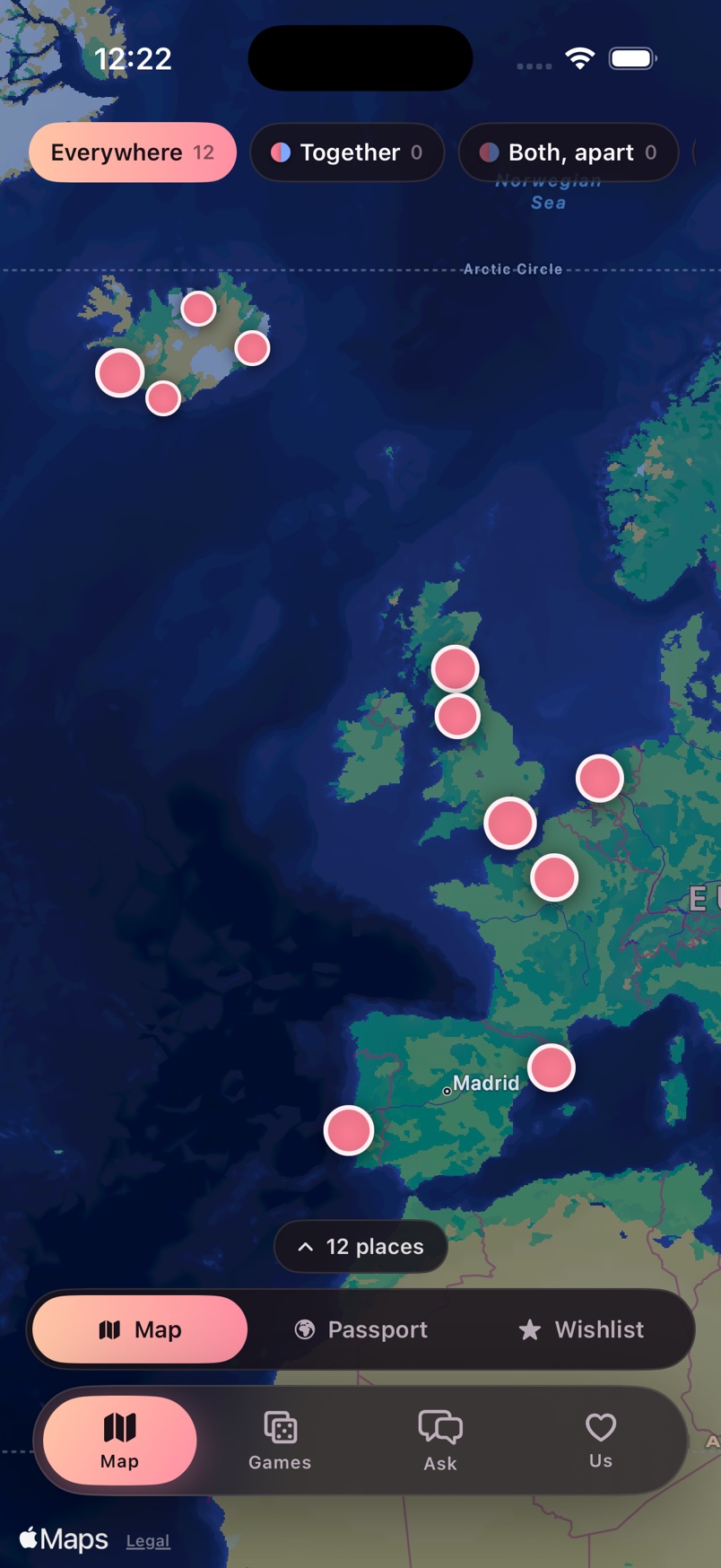
No check-ins, no diary, nothing to fill in. The scan reads the metadata your camera wrote at the time — where, and when — and groups it into trips. Both ledgers meet in the middle, and what you share appears.
Dates and locations only, on your phone. The images themselves are never opened, never copied and never uploaded.
Photographs near each other in space and time become one visit, so a weekend is a weekend rather than forty dots.
When their scan lands, every place is marked: together, one of you, or — the good one — both of you, years apart.
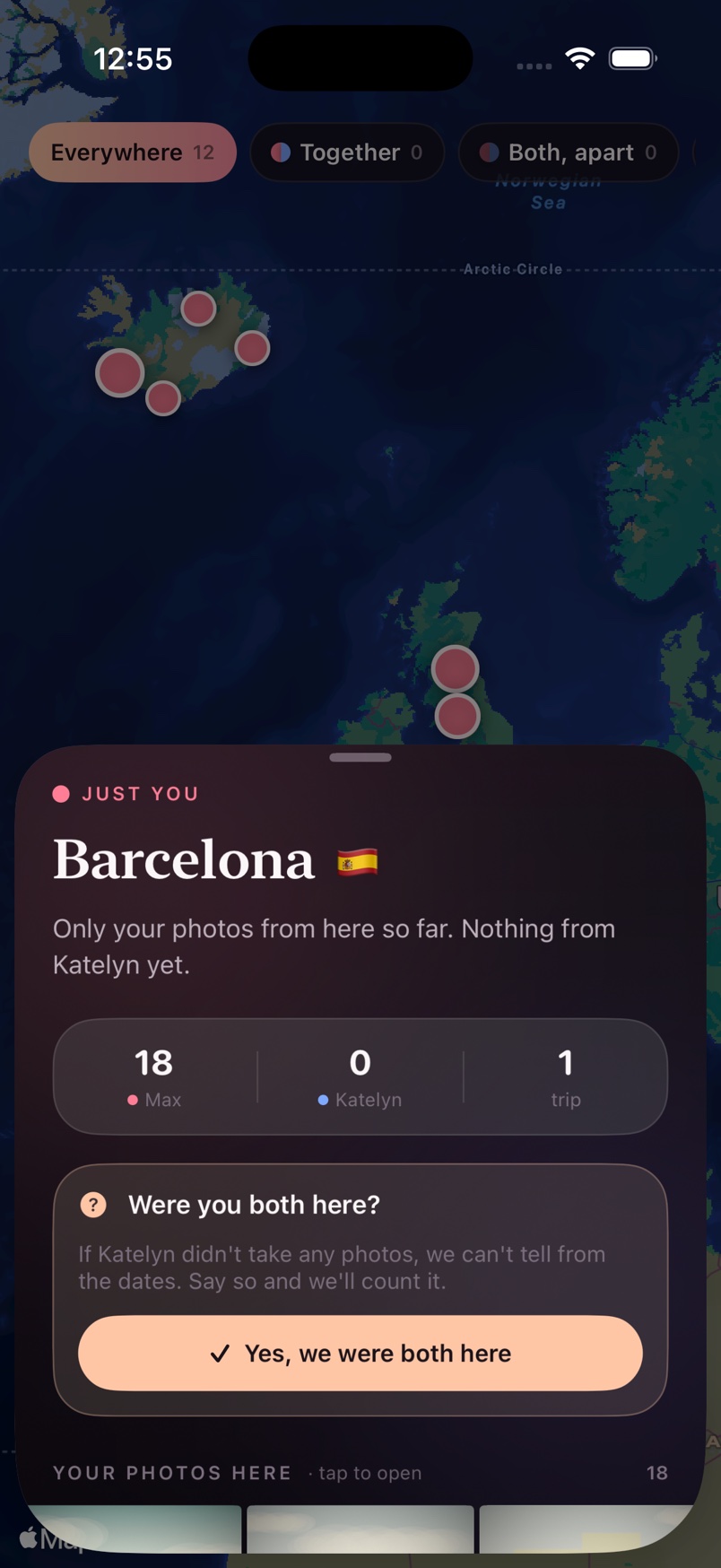
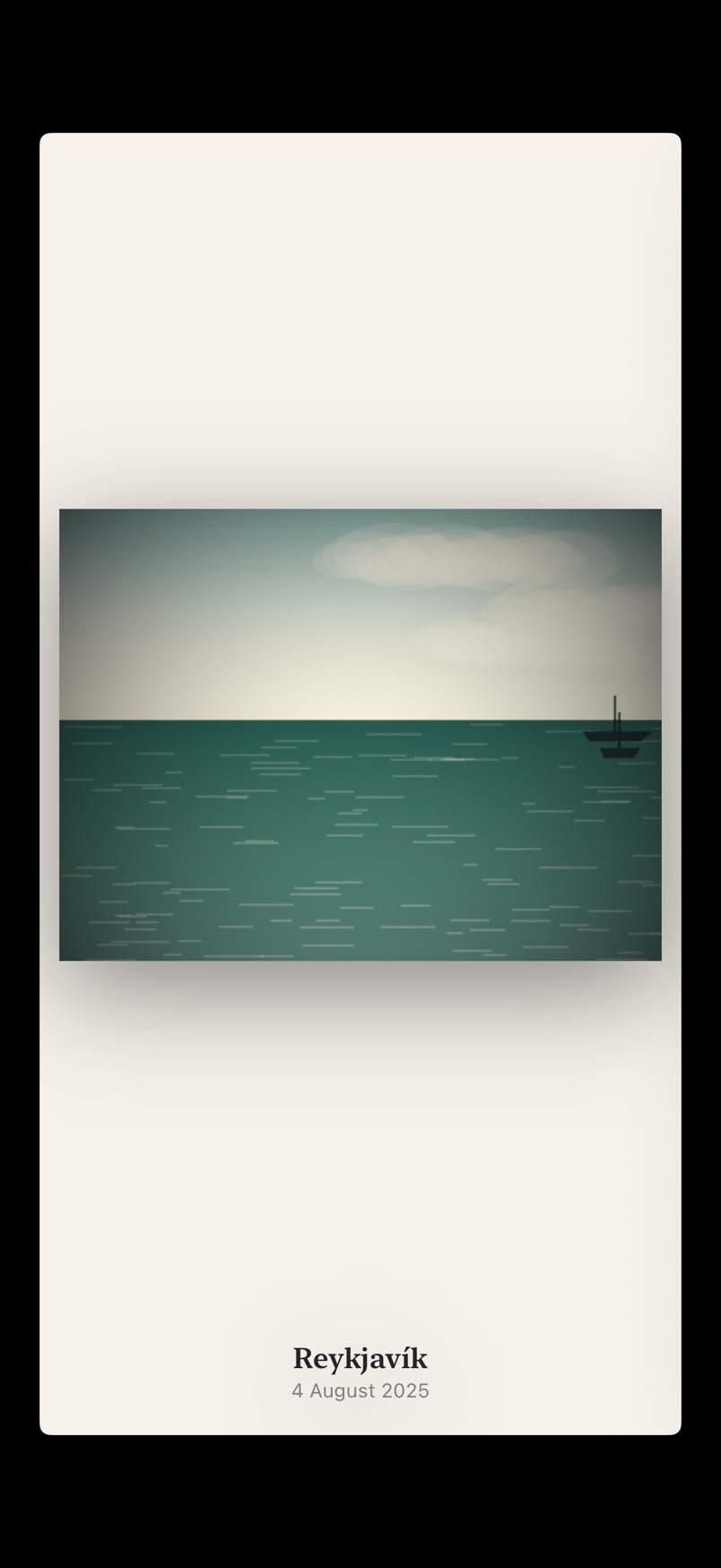
Open a place and its photographs come back as prints, with where and when written underneath. Pick one up, turn it in your hand, throw it away to close. Videos get the same frame and play where they sit.
Four widgets, on your Lock Screen and your Home Screen, built from what the app already knows. Most days this is the whole of it: you glance at your phone and there they are, without opening anything.
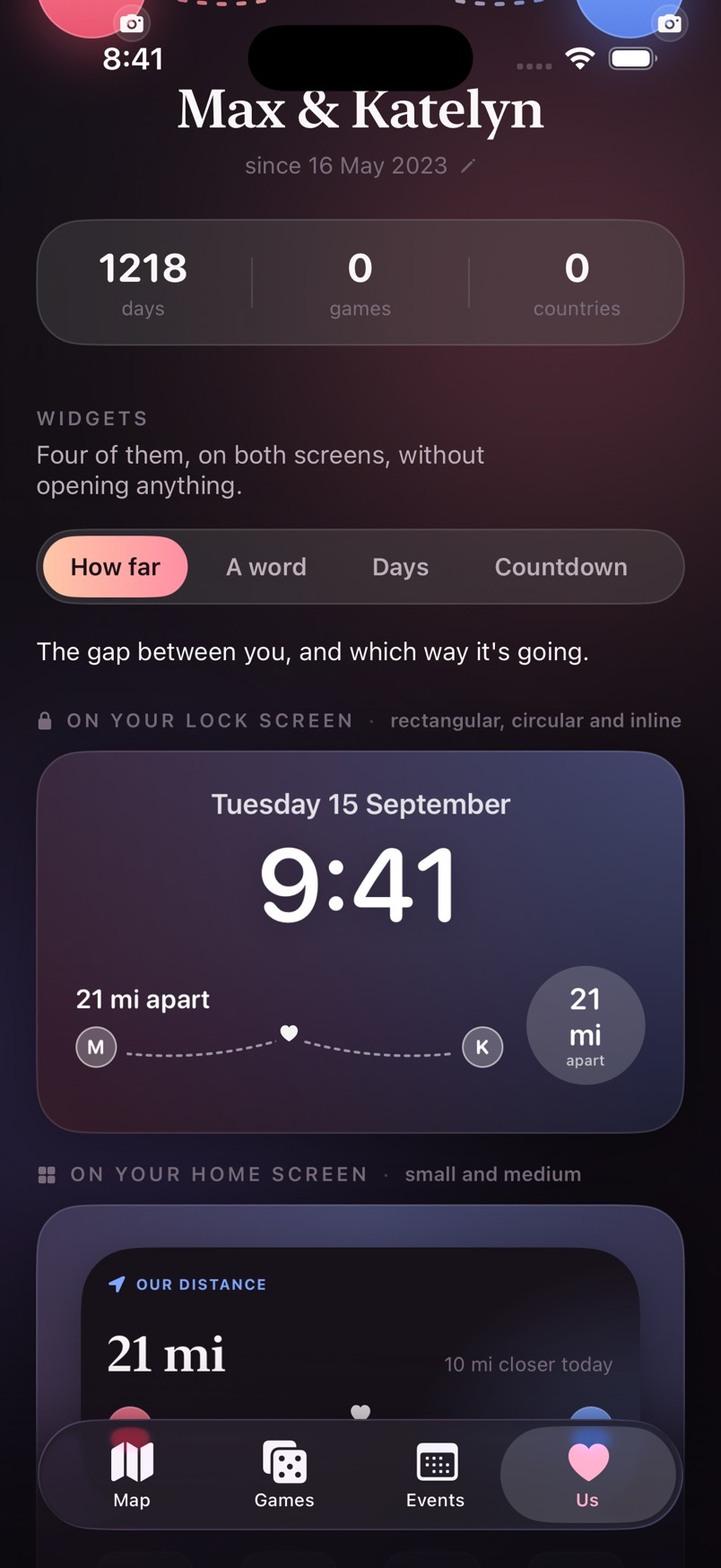
A dashed road between the two of you with a heart at the top of it, and the gap underneath — and which way that gap is going: 30 miles closer today. When you're in the same place the ends meet and the number goes away.
One sentence, sitting under their clock until you change it. Not a thread and not a chat — a single line, which is why it gets read rather than scrolled past.
How long it's been, and how long until the next time you're in the same room. Whatever is next on your list is what the countdown counts — a flight, a birthday, Thursday's table.
The distance is free and lives at the top of the app for anybody who installs it; putting it on a Lock Screen is what the subscription is for. Your position is rounded to about a kilometre before it is sent, and it updates in the background only if you ask it to — at most once an hour.
Not party games with the numbers filed down. You answer the whole set on your own; they answer the same set whenever they next pick up their phone; and the comparison opens for both of you when the second one finishes. Nobody has to be free at the same moment.
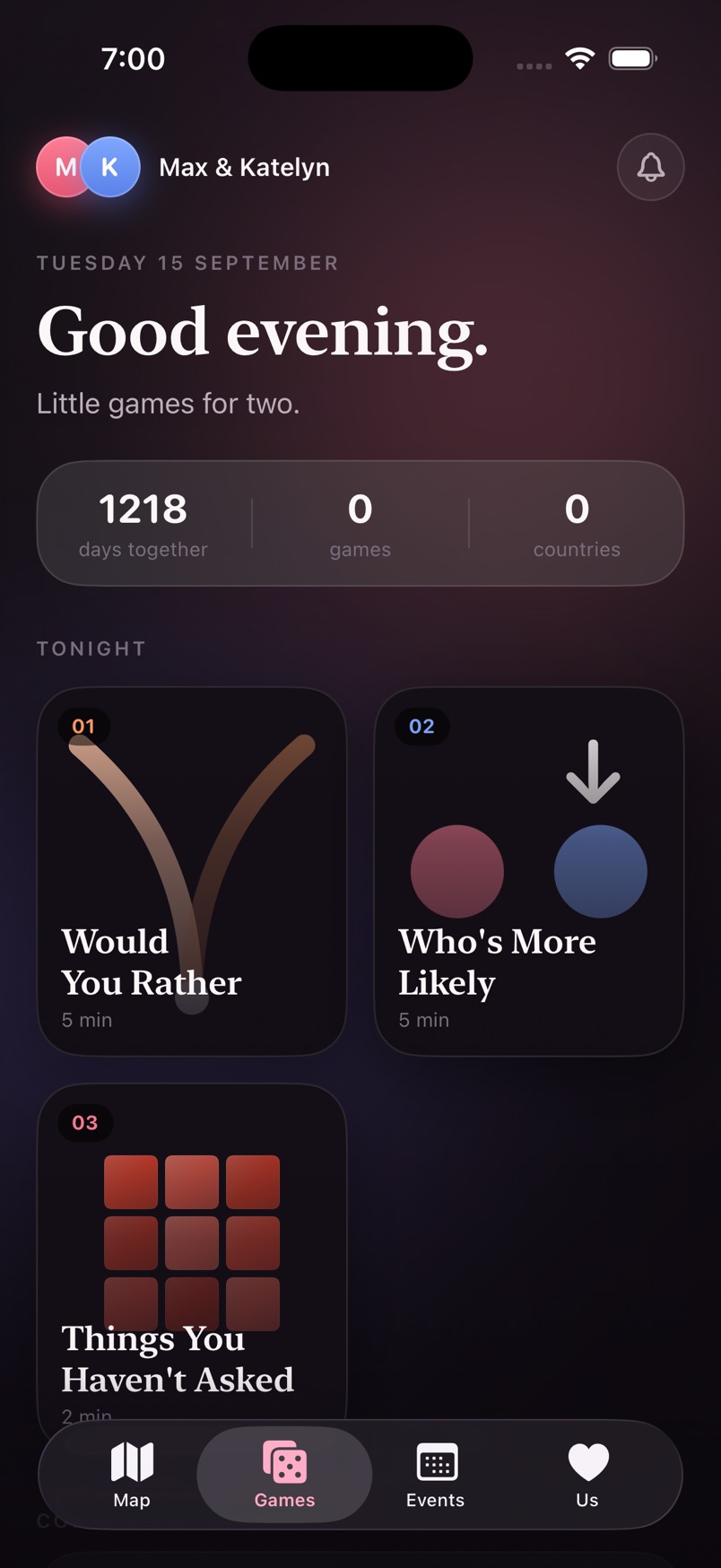
Eight impossible choices. Pick the one you'd actually want, then see how much of the same life you're imagining.
Eight sentences about the two of you. Point at whoever it fits, and find out whether they'd have pointed the same way.
One question at a time, sealed until you have both written an answer. Neither of you can read theirs first.
Truth Ladder and Two Truths are next. A round you have finished sits and waits: the bell on the launcher tells you when it is your turn, and when a comparison has opened.
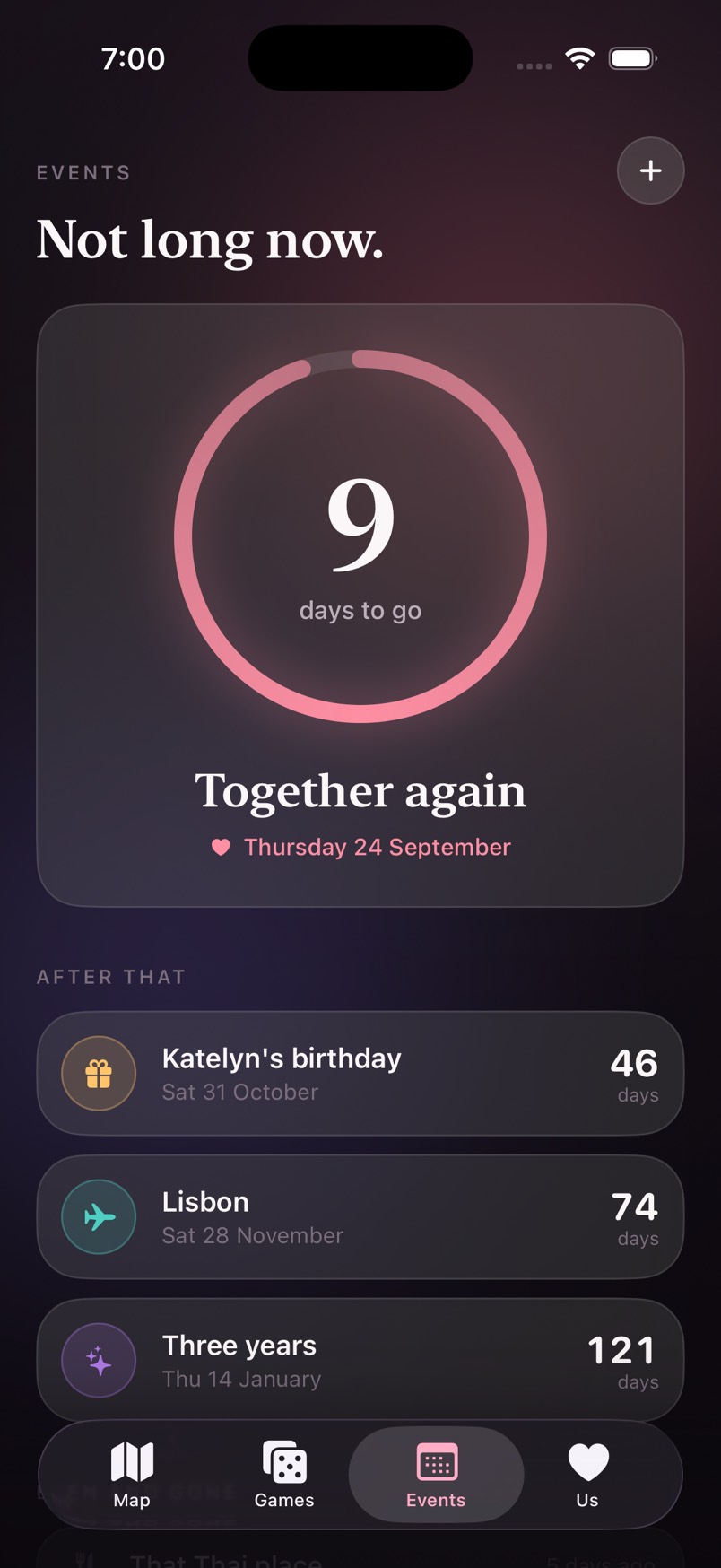
The next time you're in the same place. A birthday. The flight out. Thursday's table. One list, shared between the two of you, and whatever is next sits on your Lock Screen without you opening anything.
The one that matters
Come round every year
Counted from the day you book
The map needs your photo library, which is about as personal as it gets. So here is the whole list, with nothing rounded off.
Whoever subscribes unlocks it for the pair. The other one joins with a six-character code and never sees a payment screen — because charging two people for one shared thing is absurd.
The games, the countdowns, and how far apart the two of you are. A couples app that won't answer that last one until you pay isn't worth keeping on a phone.
What a subscription buys is the map, and having the rest arrive on your Lock Screen without opening anything.
And it is the business model — the whole of it. A free couples app makes its money from the only asset it has, and here that asset would be the location history of two people's photographs. That trade isn't available, so there is nothing else running in the background.
No. The scan runs on your phone and reads only the date and location your camera stamped on each photograph. What is uploaded is a line of text per trip — a place name, the dates, how many photographs — so the two ledgers can be compared. The images stay where they are.
Yes — it is a two-player app in every part. One of you subscribes and sends the other a six-character invite code. Until they join, the map shows your own places, the countdowns are yours alone, and a finished round waits for somebody to answer it.
The map will be sparse, and the app says so rather than inventing pins. There is also a "we were both here" button for a trip where one of you had a flat battery, and a wishlist for places you haven't been yet.
Not yet. This is a native iPhone app, and the photo scanning leans on iOS in ways that don't port quickly. If the app finds its people, that changes.
That's the point. Nothing here needs you both awake at the same moment: you answer the whole set on your own, they answer the same set whenever they next pick up their phone, and the comparison opens for both of you when the second one finishes. A bell on the launcher tells you when it's your turn.
No, and not because the app politely declines to show them. The server will not hand them over until your own are written — the rows simply do not come back. The only thing it will admit to is that they have finished.
Ten minutes tonight, and the two of you can see it.
iPhone · iOS 26 or later